Your location: Home Page > RFID Blog | SILION TECH > Understanding Anti-Interference in UHF RFID Systems
News and Information
Understanding Anti-Interference in UHF RFID Systems
Author:2026-03-30 16:00:00
UHF RFID technology has become a cornerstone of modern identification and tracking systems across retail, manufacturing, and warehousing environments. As industries demand faster, more accurate, and scalable solutions, the reliability of RFID systems under complex real-world conditions has become increasingly important. One of the most critical factors influencing system performance is interference.
In high-density operational environments—such as warehouses filled with metal racks, production lines with machinery, or retail spaces with multiple electronic systems, RF signals can easily be disrupted. These disruptions lead to missed reads, inaccurate data capture, and reduced system efficiency. Anti-interference technology in UHF RFID systems is therefore not just an enhancement; it is a necessity for ensuring consistent and reliable performance.
The Nature of Interference in UHF RFID Environments
Common Sources of Interference
Interference in UHF RFID systems can originate from several sources, each affecting signal integrity in different ways. Metallic surfaces reflect radio waves, creating multipath effects where signals arrive at the reader from multiple directions. Liquids, on the other hand, absorb RF signals, weakening communication between tags and readers. Additionally, electromagnetic noise from nearby electronic devices, overlapping reader frequencies, and dense tag populations can further complicate signal clarity.
Impact on System Performance
When interference is not properly managed, it results in unstable read rates, increased error margins, and reduced operational visibility. For businesses relying on real-time tracking—such as inventory management or asset monitoring these inefficiencies can translate into operational delays and financial losses. Therefore, addressing interference is essential for maintaining system accuracy and building trust in RFID-based processes.
Core Anti-Interference Technologies in UHF RFID
Adaptive Frequency Hopping
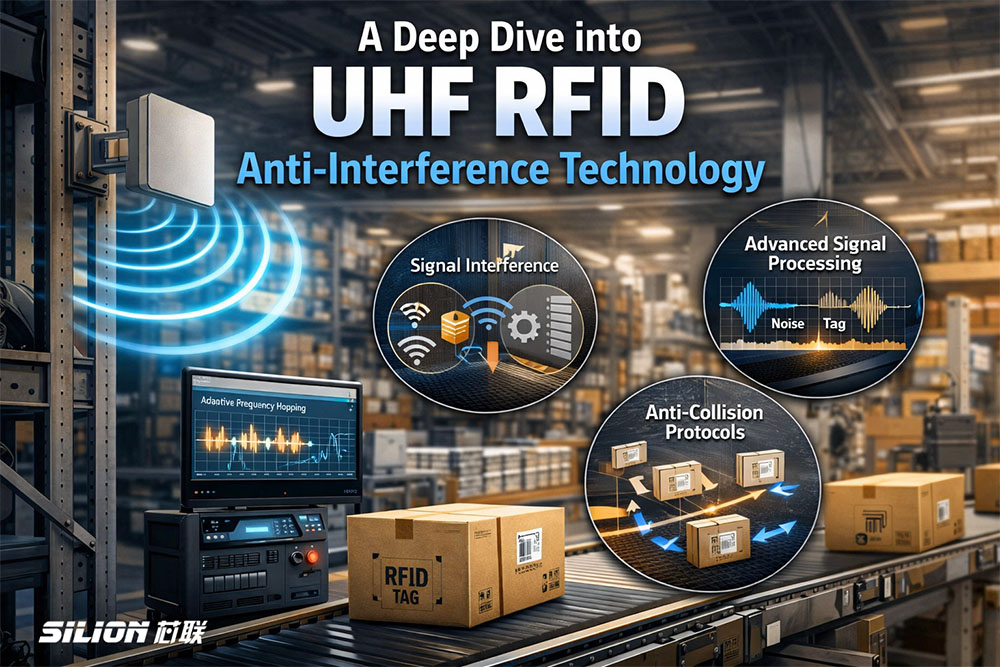
One of the most effective methods for minimizing interference is adaptive frequency hopping. This technique allows RFID readers to dynamically switch between different frequency channels within the UHF band. By avoiding congested or noisy frequencies, the system maintains stable communication even in environments with multiple RF sources.
Advanced Signal Processing
Modern RFID systems incorporate sophisticated signal processing algorithms to distinguish between valid tag responses and background noise. These algorithms enhance signal clarity, reduce false readings, and improve overall system sensitivity. As a result, tags can be accurately identified even in challenging environments.
Anti-Collision Protocols
In scenarios where multiple tags are present within the reader’s field, anti-collision protocols play a vital role. These protocols coordinate tag responses dynamically to prevent signal collisions and guarantee that each tag is identified reliably. This is particularly important in logistics and warehousing applications where large volumes of items are scanned simultaneously.
Reader and Antenna Optimization
The design and configuration of RFID readers and antennas significantly influence system performance. High-quality antennas with optimized radiation patterns can minimize signal reflection and improve coverage. Additionally, proper reader power settings and antenna placement help reduce interference while maximizing read efficiency.
Practical Strategies for Interference Mitigation
Environmental Assessment and System Design
A successful RFID deployment begins with a thorough assessment of the operational environment. Identifying potential sources of interference such as metal structures, liquid containers, and electronic equipment, allows for strategic system design. Customized solutions tailored to specific industry needs ensure optimal performance.
Tag Selection and Placement
Choosing the right RFID tags for specific applications is equally important. Specialized tags designed for metal or liquid environments can significantly improve read reliability. Proper tag placement further enhances signal strength and reduces the likelihood of interference.
System Calibration and Testing
Continuous calibration and real-world testing are essential for maintaining system stability. By monitoring performance metrics and adjusting system parameters, businesses can ensure consistent operation even as environmental conditions change.
Delivering Reliable RFID Performance Through Expertise
With over 20 years of experience in smart identification technologies, companies like SILION TECH understand that overcoming interference challenges requires a combination of advanced technology and practical expertise. From high-performance UHF RFID modules to tailored industry solutions, the focus remains on delivering systems that perform reliably in the most demanding environments.
By integrating robust anti-interference technologies with real-world application knowledge, businesses can unlock the full potential of RFID systems, achieving higher accuracy, improved efficiency, and greater operational visibility.
UHF RFID anti-interference technology is a critical enabler for modern industries seeking dependable and scalable tracking solutions. By addressing the challenges posed by complex environments, these technologies ensure that RFID systems deliver consistent and accurate results.
As industries continue to evolve, the ability to maintain stable performance under diverse conditions will define the success of RFID implementations. Investing in advanced anti-interference solutions is not just a technical decision, but also a strategic move toward smarter, more resilient operations.