Your location: Home Page > RFID Blog | SILION TECH > Module Self-Heating and Its Effect on Frequency Accuracy
News and Information
Module Self-Heating and Its Effect on Frequency Accuracy
Author:2026-05-11 17:00:00
A Complete Technical Guide for Engineers, Designers, and Technical Enthusiasts
Published: 2026 | Category: Electronic Engineering, RF Engineering, Oscillator Design, PCB Thermal Management
Keywords: Module self-heating, frequency accuracy, oscillator temperature drift, TCXO, OCXO, quartz crystal oscillator, thermal frequency stability, PCB thermal design, frequency drift PPM, clock accuracy
Introduction: Temperature — The Invisible Killer of Frequency Accuracy
In modern electronic systems, clock and frequency references are generally regarded as stable and fixed timing sources. Quartz crystal oscillators are also commonly believed to output a constant frequency during device operation. However, this ideal state does not exist in practical embedded and RF systems.
All active electronic modules generate power consumption and subsequent self-heating during continuous operation. Temperature variations alter the mechanical properties, material parameters, and electrical performance of resonant devices, ultimately causing frequency deviation. For RF transceivers, timing circuits, and high-precision measurement equipment, thermal-induced frequency drift is one of the most common yet easily overlooked core factors leading to system performance degradation.
This paper systematically elaborates the physical mechanism of module self-heating and the quantitative characteristics of thermal frequency drift. It compares the thermal stability of mainstream oscillators, sorts out standardized evaluation indicators, and provides practical PCB layout, thermal design, and software compensation solutions for high-precision electronic and RF systems.
SEO Description Target Search Terms: module self-heating frequency drift, oscillator temperature coefficient, TCXO and OCXO accuracy comparison, crystal frequency temperature characteristics, temperature effect on oscillator frequency, RF module PCB thermal management
1. Overview of Module Self-Heating
1.1 Core Definition
Module self-heating refers to the steady-state temperature rise caused by continuous power consumption of internal circuits after electronic devices are powered on. Semiconductor active devices, power conversion circuits, and RF power circuits continuously convert electrical energy into heat, raising the junction temperature of devices and the local ambient temperature of the PCB.
For digital logic circuits, slight temperature fluctuations barely affect functional operation. Nevertheless, for frequency resonant circuits such as crystal oscillators, MEMS resonators, and PLL frequency synthesizers, tiny temperature changes cause measurable frequency deviations, directly reducing timing accuracy and RF spectral purity.
1.2 Main Heat Sources of Electronic Modules
The thermal load of electronic modules mainly originates from the following devices and circuits:
• Semiconductor Active Devices: Transistors, operational amplifiers, and RF power amplifiers generate Joule heat during continuous conduction operation.
• Crystal Oscillator Driving Circuit: The reverse amplifier circuit used to maintain crystal resonance has static power consumption, resulting in continuous local heating.
• Power Conversion Circuit: LDO and DC-DC regulators dissipate differential power as heat during voltage conversion.
• PLL and Frequency Synthesizer: Multi-stage phase-locked loops operate dynamically and produce stable power consumption and heat.
• RF Power Amplifier Circuit: High-power transmitting devices concentrate heat in a compact package, serving as the primary cause of module temperature rise.
1.3 Thermal Equilibrium and Self-Heating Transient Curve
At the initial power-on stage, all devices remain at ambient temperature. As the device operates continuously, internal heat accumulation exceeds heat dissipation, causing the temperature to rise gradually until the system reaches thermodynamic equilibrium. The stabilized temperature at this stage is defined as the module's steady-state operating temperature.
The time required for the system to achieve thermal equilibrium is defined as the thermal time constant (τ_th). Small SMD oscillators have a thermal time constant of only a few seconds, while high-precision packaged OCXOs require several minutes to stabilize. During the warm-up transient phase, the frequency drifts continuously and cannot maintain accuracy.
Core Point: Oscillator frequency measured during cold start cannot represent steady-state operating frequency. Crystal designs without temperature compensation may experience warm-up drift up to tens of PPM.
2. Physical Mechanism of Temperature Affecting Frequency
2.1 Temperature Characteristics of Quartz Resonators
Most high-precision frequency references rely on the piezoelectric resonance characteristics of quartz crystals. The mechanical resonant frequency of a crystal is determined by wafer size, elastic modulus, and material density. All three core parameters are temperature-sensitive, so temperature changes inevitably lead to frequency drift.
The quantitative relationship between temperature and frequency deviation is defined by the Temperature Coefficient of Frequency (TCF).
2.2 Third-Order Temperature-Frequency Characteristics of AT-Cut Crystals
With excellent third-order thermal stability, AT-cut quartz crystals have become the mainstream solution for MHz-band oscillators, whose temperature-frequency variation follows a cubic polynomial rule:
․ A flat and highly stable interval exists near the inflection point temperature (typical inflection temperature of commercial crystals ranges from 25℃ to 30℃).
․ When the temperature deviates from the inflection point, the slope of frequency drift increases significantly.
․ The total drift ranges from ±30 to ±50 PPM across the industrial full temperature range of -40℃ to +85℃.
The crystal inflection temperature can be precisely adjusted by wafer cutting angle. For modules with long-term self-heating temperature rise, priority should be given to crystals with an inflection temperature of 40℃ to 60℃ to match the steady-state operating temperature of the module and reduce operating drift effectively.
2.3 Mathematical Model of Thermal Frequency Drift
The frequency deviation of AT-cut crystals follows the standard third-order temperature model:

Where: T denotes the device operating temperature,  denotes the crystal inflection temperature, and
  represents the first-order, second-order, and third-order temperature coefficients, respectively. Under high-temperature self-heating conditions, the third-order term dominates frequency drift and cannot be ignored.
2.4 Other Temperature-Sensitive Frequency Devices
Quartz crystals are not the only temperature-sensitive components in frequency generation systems. All resonant units exhibit temperature drift characteristics:
․ LC Resonant Circuit: Inductance, permeability, and size vary with temperature, and non-C0G capacitors suffer severe capacitance temperature drift, causing frequency deviation.
․ Silicon-Based MEMS Resonator: Features an extremely high inherent negative temperature coefficient (approximately -30ppm/℃) and requires active temperature compensation for stable operation.
․ Ceramic Resonator: Full-temperature drift reaches ±0.5% with low accuracy, making it unsuitable for precision systems.
․ RC Oscillator: Highly temperature-sensitive, only applied in non-precision low-demand timing scenarios.
3. Oscillator Types and Self-Heating Performance Comparison
3.1 Standard Crystal Oscillator (XO)
Standard XOs are uncompensated passive resonant devices that operate purely relying on the inherent characteristics of quartz materials without any temperature correction mechanism. The operating frequency fully follows the intrinsic temperature-frequency curve of the crystal.
Self-heating of the driving circuit increases the internal crystal temperature by 5~20℃ compared with ambient temperature, deviating from the optimal operating interval and generating a fixed and uneliminable thermal frequency offset.
Typical Stability: ±50 ~ ±100ppm (-40℃~+85℃)
3.2 Temperature Compensated Crystal Oscillator (TCXO)
TCXOs integrate temperature sensing and real-time frequency correction circuits to offset crystal temperature drift. Modern TCXOs generally adopt digital lookup table compensation schemes, achieving significantly improved stability and consistency.
However, a temperature gradient exists between the internal temperature sensor and the crystal resonator, limiting compensation accuracy during the warm-up phase. Thus, the nominal accuracy only takes effect after thermal stabilization.
Typical Stability: ±0.5 ~ ±2.5ppm (-40℃~+85℃)
3.3 Oven Controlled Crystal Oscillator (OCXO)
OCXOs adopt a completely different frequency stabilization method: a built-in heating and closed-loop temperature control system keeps the crystal constantly at 70~85℃, completely avoiding the influence of ambient temperature and module self-heating. External temperature variation barely affects resonant frequency after thermal stabilization.
OCXOs generate large amounts of heat during operation, so sufficient dedicated thermal design margin must be reserved in system design.
Typical Stability: ±0.001 ~ ±0.1ppm (after warm-up completion)
3.4 MEMS Oscillator
Silicon-based MEMS resonators feature shock resistance and miniaturization, but their inherent temperature drift is much higher than that of quartz crystals. Temperature-compensated commercial MEMS oscillators meet the medium-precision requirements of low-cost miniature devices.
The temperature gradient among resonators, temperature sensors, and compensation circuits is the core bottleneck restricting high-precision applications.
Typical Stability: ±0.5 ~ ±5ppm
Oscillator Type | Stability (ppm) | Self-Heating Sensitivity | Warm-Up Time | Cost Range |
XO | ±50–100 | High | <1s | Low ($0.5~$5) |
TCXO | ±0.5–2.5 | Medium | 1~5min | Medium ($5~$50) |
OCXO | ±0.001–0.1 | Low (Oven Shielded) | 5~30min | High ($50~$500+) |
MEMS Oscillator | ±0.5–5 | Medium | <1s | Medium ($2~$20) |
Rubidium Atomic Oscillator | ±0.001–0.01 | Extremely Low | 5~10min | Very High ($500+) |
4. Standardized Characterization and Parameters of Self-Heating Effect
4.1 Core Evaluation Indicators
4.1.1 PPM / PPB Frequency Deviation
Parts Per Million (PPM) quantifies relative frequency error. 1ppm corresponds to a 1Hz frequency deviation for a 1MHz carrier. This indicator unifies frequency error evaluation standards for different operating frequencies.
4.1.2 Temperature Coefficient of Frequency (TCF)
TCF represents the frequency offset caused by unit temperature change (ppm/℃). The TCF value is extremely low near the crystal inflection point, while it rises sharply beyond 10ppm/℃ at extreme temperatures.
4.1.3 Frequency-Temperature Curve (f-T Curve)
The f-T curve fully characterizes the full-temperature thermal performance of oscillators. Module self-heating changes the actual operating temperature point of oscillators, deviating from the factory calibration curve and causing unexpected frequency deviation.
4.1.4 Allan Deviation (ADEV)
ADEV is a frequency stability statistical index defined by IEEE 1139, used to evaluate frequency fluctuations at different time scales. Self-heating mainly degrades short-to-medium term stability (1~1000s) and forms an obvious drift slope on the Allan deviation curve during warm-up.
4.2 Thermal Resistance and Thermal Time Constant
The steady-state temperature rise of a module is determined by power consumption and thermal resistance  (℃/W). The thermal time constant
 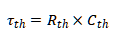 characterizes the response speed of the system's thermal stabilization.
These two parameters can accurately predict device warm-up drift, stabilization time, and frequency transient response under dynamic power consumption changes.
5. System-Level Impacts of Self-Heating Drift
5.1 GNSS/GPS Positioning Systems
Satellite positioning accuracy highly depends on reference clock precision. Frequency drift causes phase and timing errors, which are directly converted into positioning deviation. Slight PPM-level drift reduces signal correlation accuracy and increases positioning noise. High-precision GNSS devices adopt TCXOs or disciplined clocks to suppress thermal drift interference.
5.2 5G Wireless Communication Systems
3GPP NR standards impose strict frequency accuracy requirements for base stations (±0.05ppm). RF power amplifier self-heating leads to reference frequency offset, causing adjacent channel interference, handshake failure, and link instability. Thermal isolation between RF power circuits and clock circuits is essential for 5G device compliance design.
5.3 Test and Measurement Instruments
The measurement accuracy of spectrum analyzers, signal generators, and frequency counters is fully traced to internal reference oscillators. The nominal accuracy specified by manufacturers can only be achieved after device warm-up and self-heating stabilization.
5.4 Industrial IoT Intermittent Nodes
Low-power IoT devices generally adopt sleep-transmit intermittent operation modes. RF activation generates instantaneous thermal shock, and repeated temperature cycles cause periodic frequency fluctuations, reducing synchronization accuracy and increasing packet loss probability.
5.5 Software Defined Radio (SDR)
Almost all frequency drift of SDR devices within 5~15 seconds after power-on is caused by local oscillator self-heating. The universal industry correction method is to calibrate by configuring PPM offset parameters via software after thermal stabilization.
6. Self-Heating Effect Suppression and Compensation Solutions
6.1 PCB Layout Physical Isolation
Physical isolation is the lowest-cost and most fundamental anti-drift solution. Frequency reference devices shall maintain a minimum spacing of 10~20mm from high-power heat-generating devices. PCB slotting and thermal isolation notches can block lateral heat conduction on the board.
6.2 Advanced Thermal Isolation Design
High-level thermal isolation solutions include low thermal conductivity packaging materials, suspended device mounting, and reduced clock circuit trace width to minimize thermal conduction paths to oscillators.
6.3 Oscillator Model Selection Matching
Oscillator types shall be matched according to system accuracy indicators to avoid performance surplus or insufficient precision:
․ ±10ppm accuracy requirement: XO for narrow-temperature consumer devices
․ ±1~2ppm accuracy requirement: TCXO as cost-effective mainstream solution
․ ±0.1ppm accuracy requirement: OCXO is mandatory
․ Sub-ppb ultra-high accuracy: Rubidium atomic clock or GPS disciplined clock
6.4 Digital PPM Compensation and Calibration
Modern communication main control chips support register-level frequency fine-tuning. By calibrating the device warm-up drift curve and temperature offset rules in advance, the firmware can dynamically correct thermal drift based on lookup tables, realizing software temperature compensation equivalent to software TCXO effects.
6.5 GPS Disciplined Oscillator (GPSDO)
GPSDO uses the 1PPS high-precision timing signal from satellite atomic clocks to continuously calibrate local oscillators, completely eliminating long-term thermal drift and device aging errors to achieve ultra-high timing stability.
6.6 Pre-Heating Temperature Stabilization Mechanism
High-precision devices can adopt pre-heating mechanisms to stabilize the oscillator temperature to a steady state before formal operation, eliminating transient frequency drift during startup.
Design Taboo: Only C0G/NP0 capacitors are allowed for crystal load circuits. X5R/X7R capacitors have up to 15% full-temperature capacitance drift, introducing severe frequency errors independent of crystals, and are strictly prohibited in clock circuits.
7. PCB Thermal Design Specifications for High-Precision Frequency Systems
7.1 Pre-Layout Thermal Simulation Analysis
Thermal simulation shall be completed before PCB finalization to locate hot spots, predict temperature rise amplitude, verify thermal isolation effects, and avoid subsequent thermal design defects.
7.2 Partitioned Ground Plane Design Strategy
The ground plane serves as an efficient heat conduction and homogenization medium, easily causing cross-region thermal coupling. Analog/clock ground and power/RF ground shall be physically partitioned with single-point common grounding to block heat conduction to the clock area.
7.3 Heat Dissipation and Airflow Optimization
Heat sinks shall be equipped for high-power heat-generating devices, and equipment ventilation airflow shall be optimized to reduce the steady-state temperature of the entire board and indirectly improve frequency reference stability.
7.4 Thermal Routing Constraints for Multi-Layer PCBs
Vias and inner copper foils of multi-layer PCBs form vertical heat conduction channels. High-power traces and thermal vias shall be avoided near crystal pins to prevent vertical thermal intrusion interfering with clock devices.
8. Engineering Case: Self-Heating Drift Analysis of UHF RFID Modules
The mainstream operating frequency band of Ultra-High Frequency Radio Frequency Identification (UHF RFID) is 840~960MHz, a narrowband high-precision RF communication scenario with extremely strict requirements for reference frequency stability. UHF RFID reader modules feature intermittent high-power transmission, dense tag reading, and continuous polling operation. Devices maintain ultra-low power consumption and ambient temperature in sleep mode, while continuous card reading, multi-tag dense identification, and high-power transmission cause rapid heat accumulation in RF power amplifiers, PLLs, and power regulation circuits, leading to significant temperature rise and frequency drift within a short time. Actual engineering tests show that when the module operates at full load for 3 to 5 minutes, the temperature rise of the core thermal control area on the PCB can reach 12~16℃, directly affecting RF carrier accuracy and reading sensitivity.
UHF RFID protocols have strict specifications for carrier frequency tolerance and spectral purity. Tiny frequency drift will cause carrier offset, adjacent channel interference, tag wake-up failure, long-distance reading failure, and multi-tag crosstalk. Taking a mainstream high-precision TCXO (temperature drift coefficient: 0.1ppm/℃) as an example, a 15℃ operating temperature rise will cause an instantaneous frequency drift of 1.5ppm, exceeding the frequency tolerance threshold of some low-cost reader devices, and resulting in reduced reading distance, fluctuating recognition rate, and degraded batch reading stability. The core optimization solutions for this working condition are as follows: prioritize high-stability TCXOs matching the UHF RFID frequency band and with inflection temperature adapted to the module steady-state operating temperature; implement partition thermal isolation and PCB slotting thermal insulation design for RF power amplifiers, LDO heat sources and clock reference devices; embed firmware dynamic PPM temperature compensation algorithms to adapt to thermal shock characteristics of intermittent operation; high-density reading devices can be equipped with simple heat dissipation structures to reduce overall steady-state temperature rise.
9. Industry Standards and Technical Specifications
․ ISO/IEC 18000-6C: UHF RFID air interface communication protocol, specifying core indicators such as 860~960MHz band carrier frequency tolerance and RF stability
․ ETSI EN 302 208: RF parameters, frequency accuracy, and EMC test specifications for UHF RFID equipment
․ IEEE 1139: Standard definitions for frequency stability and Allan deviation
․ ETSI EN 300 220: Frequency tolerance specifications for short-range wireless devices
․ 3GPP TS 38.104: 5G base station RF transmission frequency accuracy requirements
․ JEDEC JESD51: Industry specifications for thermal measurement of electronic devices
10. Advanced Technology and Industry Development Trends
10.1 Single-Chip Integrated Temperature Compensation Technology
Monolithically integrating resonators, temperature sensors, and compensation circuits eliminates internal device temperature gradient errors, improving MEMS oscillator stability to ±0.1ppm level.
10.2 Machine Learning Dynamic Compensation Technology
AI prediction models based on temperature timing and power load can fit the nonlinear thermal drift of complex multi-heat-source systems, achieving better correction effects than traditional fixed lookup table compensation algorithms.
10.3 Chip-Scale Atomic Clock (CSAC)
Chip-scale atomic clocks completely get rid of crystal temperature dependence and provide atomic-level ultra-high frequency stability, widely applied in military, aerospace, and high-end communication infrastructure.
10.4 3D Packaging Thermal Isolation Technology
Advanced 3D stacking packaging and thermal barrier layer technology physically isolate frequency reference chips from high-power logic and RF chips, fundamentally eliminating system self-heating interference from the hardware architecture.
11. Frequently Asked Questions (FAQ)
Q: How much frequency drift is generally caused by module self-heating?
A: A 10℃ self-heating temperature rise of standard AT-cut crystals usually causes 5~30ppm drift, depending on the operating point on the third-order temperature-frequency curve.
Q: Can TCXO completely eliminate self-heating errors?
A: No. TCXO compensation accuracy is limited by the temperature gradient between the sensor and resonator. Dynamic drift during warm-up cannot be completely eliminated, and nominal accuracy can only be achieved after thermal stabilization.
Q: Does the PPM accuracy in device manuals include self-heating errors?
A: Manufacturer parameters are tested under a standard constant temperature of 25℃, excluding self-heating drift in practical applications. An additional accuracy margin shall be reserved in engineering design.
Q: Why do SDR devices suffer severe frequency drift after power-on?
A: SDR local oscillators continue to self-heat after power-on and require 15~30 minutes to reach thermal equilibrium for stable frequency output.
Q: What is the optimal load capacitor type for crystal circuits?
A: Only C0G/NP0 capacitors are recommended, with nearly zero temperature coefficient to avoid frequency errors introduced by capacitor temperature drift.
Q: How to accurately measure module self-heating frequency drift?
A: Adopt a high-resolution frequency counter traced by GPSDO to record frequency data continuously for 30~60 minutes and plot a complete device warm-up drift curve.
12. Drift Suppression Solution Quick Reference Table
Optimization Solution | Implementation Difficulty | Cost | Optimization Effect | Applicable Scenarios |
PCB Physical Isolation Layout | Low | No Cost | Medium | All electronic designs |
Adopt C0G/NP0 Load Capacitors | Low | Ultra-Low Cost | Medium | All crystal oscillator circuits |
Upgrade XO to TCXO | Low | Low-Medium | Excellent | ±1~2ppm accuracy requirements |
Upgrade TCXO to OCXO | Low-Medium | Medium-High | Perfect | ±0.1ppm high-precision requirements |
Thermal Isolation / Shielding Design | Medium | Low Cost | Excellent | High-density PCB equipment |
Ground Plane Partition Design | Medium | No Cost | Medium | Mixed analog-digital circuits |
Software PPM Compensation & Calibration | Medium | No Cost | Medium | IoT and embedded devices |
GPS Disciplined Clock | High | High Cost | Extremely Excellent | Communication infrastructure & high-precision timing equipment |
Chip-Scale Atomic Clock | Low | Ultra-High Cost | Top-Level | Military, aerospace & high-end communication |
13. Conclusion
Module self-heating is an inherent physical characteristic of all powered electronic systems. Temperature rise caused by device power consumption inevitably leads to frequency offset of crystal, MEMS, and LC frequency references. The power-on warm-up transient phase features the worst frequency stability and must be prioritized in system timing and RF design.
The anti-thermal-interference capability of oscillators follows a clear hierarchy: Crystal Oscillator (XO) < MEMS Oscillator < Temperature Compensated Crystal Oscillator (TCXO) < Oven Controlled Crystal Oscillator (OCXO) < Atomic Clock. Reasonable PCB thermal isolation layout, device selection, standardized thermal characteristic calibration and software compensation are core engineering methods to guarantee device frequency accuracy and system stability.
For all kinds of precision electronic, communication and sensing systems, fully understanding and effectively suppressing self-heating-induced frequency drift can significantly improve product consistency, anti-interference capability and industry standard compliance.
© 2026 SILION TECH. All rights reserved.